







- Fabrication and Characterization of Functional Silicone Hydrogel Contact Lenses Containing Nanocellulose
Jin-Wook Kim*, A-Young Sung*†
* Dept. of Optometry and Vision Science, Daegu Catholic University, Daegu 38430, Korea
This article is an open access article distributed under the terms of the Creative Commons Attribution Non-Commercial License (http://creativecommons.org/licenses/by-nc/4.0) which permits unrestricted non-commercial use, distribution, and reproduction in any medium, provided the original work is properly cited.
This study applied nanocellulose, a natural polymer, as an additive to compensate for the low wettability and mechanical strength of silicone hydrogel contact lenses and to impart additional functions such as ultraviolet blocking and antibacterial activity. For lens fabrication, nanocellulose was added at varying concentrations ranging from 0.03 wt% to 0.10 wt% to a silicone hydrogel formulation primarily composed of HEMA, NVP, DMA, and TRIS, and the optical properties, physical characteristics, and biological safety of the fabricated lenses were comprehensively evaluated. As a result, UV-B transmittance continuously decreased with increasing nanocellulose content from 76.22% in the control group to 36.21% at 0.10 wt%, confirming the expression of UV-blocking performance without an additional blocking agent. The water content increased from 42.2% in the control group to a maximum of 48.0%, while the refractive index remained within 1.4260–1.4265, indicating a trend of increased hydrophilicity without compromising optical transparency. Surface analysis of the fabricated lenses showed that the contact angle markedly decreased from 105° in the control group to 84°, and AFM and SEM analyses confirmed that a fine network structure formed by nanocellulose particles contributed to changes in surface roughness and improved hydrophilicity. In mechanical strength evaluation, tensile strength increased by more than approximately threefold, from 0.12 kgf/mm² to 0.38 kgf/mm², due to the physical crosslinking effect of the nanoparticles. In the safety evaluation, pH, potassium permanganate reduction, and UV absorbance all fell within the regulatory limits set by the Ministry of Food and Drug Safety, demonstrating chemical safety with respect to extractables. In addition, antibacterial tests showed that lenses containing nanocellulose exhibited excellent inhibitory effects against Escherichia coli and Staphylococcus aureus. In conclusion, nanocellulose is considered a multifunctional additive capable of simultaneously improving wettability, durability, and antibacterial performance without impairing the fundamental properties of silicone hydrogel lenses.
Keywords: Silicone hydrogel, Nanocellulose, Wettability, Mechanical strength, UV-protection
Silicone hydrogel lenses have become the dominant material in the contact lens market by dramatically improving oxygen permeability, which was a limitation of conventional hydrogel lenses [1,2]. Silicone hydrogels contain hydrophobic siloxane groups that form an oxygen transport pathway through the spaces between silicone molecules rather than through water molecules [3]. This can greatly contribute to reducing the complications caused by hypoxia by smoothly supplying the oxygen required by the cornea [2]. However, the strong hydrophobicity of silicone components decreases the wettability of the lens surface and promotes the adsorption of tear components such as lipids and proteins [4,5]. Because these surface characteristics reduce wearing comfort and accelerate lens contamination, material improvement research that can secure hydrophilicity while maintaining high oxygen permeability is essential [4,6]. Accordingly, an approach is required that preserves the advantage of oxygen permeability while compensating for surface properties [6].
Recently, attempts have been made to apply nanocellulose, a natural polymer, to lens materials [7]. Cellulose is a biocompatible and biodegradable eco-friendly material, and nanocellulose particles refined to the nanometer scale have high crystallinity and a large specific surface area [8,9]. In particular, nanocellulose contains a large number of hydroxyl groups in its molecular structure, giving it an excellent ability to bind with water [10]. When used as an additive during lens polymerization, it traps moisture between hydrophobic silicone polymer chains [10]. In addition, the rigid nanocellulose particles are considered effective for reinforcing mechanical properties such as tensile strength by acting as physical crosslinking points within the polymer network [11]. Thus, nanocellulose can be used as an additive capable of simultaneously improving surface and mechanical properties [7,11].
In addition to the potential for improving material properties, ultraviolet blocking ability is also an important factor in enhancing lens functionality [12]. Because ultraviolet radiation can cause various ocular diseases such as cataracts and keratitis, the function of blocking harmful light while the lens covers the cornea is very important [12]. Nanocellulose maintains high transparency in the visible light region, but can scatter or absorb light in the ultraviolet region due to its characteristic particle arrangement and structural features [8]. Since a meaningful blocking effect can be obtained by simply adding nanocellulose without using separate organic UV blockers, it is expected to increase the value of functional lenses that protect eye health while reducing the use of chemical substances [8,12]. Therefore, this study aimed to analyze the effect of nanocellulose content on spectral transmittance to confirm the feasibility of achieving both optical transparency and ultraviolet blocking function [8].
Apart from optical function, improving wettability is essential to address the chronic issue of dryness in silicone hydrogels [6]. Wettability is mainly evaluated through contact angle measurements, where a lower contact angle indicates that the lens surface mixes well with tears [6]. The abundant hydrophilic functional groups of nanocellulose can alter the surface energy of the lens surface and induce water droplets to spread widely [10]. This is thought to help maintain the tear film on the lens surface for a longer period during lens wear and to reduce friction between the lens and the eyelid, thereby improving wearing comfort [6].
Moreover, considering hygiene and safety in the wearing environment, it is also important to secure antibacterial properties to reduce the risk of bacterial infection associated with lens wear [12]. Lenses are exposed to environments where microorganisms can easily proliferate, so it is advantageous for the material itself to have resistance to bacteria [12]. Nanocellulose forms a dense structure that can physically block bacterial penetration or can inhibit bacterial adhesion through interactions of surface charge [12]. When the lens material has intrinsic antibacterial activity, it may contribute to preventing infectious ocular diseases that can occur due to poor lens care [12]. Accordingly, this study evaluated the antibacterial activity of nanocellulose-containing lenses and explored their potential as functional medical devices beyond simple vision correction [12].
Therefore, in this study, hydrogel lenses were fabricated by adding nanocellulose at ratios from 0.03% to 0.10% to a silicone hydrogel formulation based on HEMA, NVP, DMA, and TRIS. In addition, changes in basic properties such as water content, refractive index, and tensile strength were measured, and functional indicators such as ultraviolet blocking rate, wettability, and antibacterial activity were comprehensively analyzed. Through this, the effectiveness of nanocellulose as an additive to compensate for the disadvantages of silicone hydrogel lenses and enhance their functionality was verified.
2.1 Materials
The main materials used for lens fabrication in this study are 2-hydroxyethyl methacrylate (HEMA), N,N-dimethylacrylamide (DMA), N-vinyl-2-pyrrolidone (NVP), tris(trimethylsiloxy)silylpropyl methacrylate (TRIS). The crosslinking agent ethylene glycol dimethacrylate (EGDMA) and the nanocellulose synthesis reagents microcrystalline cellulose (MCC) and cellulase were all purchased from Sigma-Aldrich (USA) and used as received. The polymerization initiator azobisisobutyronitrile (AIBN) was purchased from Junsei (Japan), and all reagents were used in the experiments without additional purification.
2.2 Synthesis of Nanocellulose
Nanocellulose was prepared using microcrystalline cellulose (MCC) as a precursor by combining enzymatic hydrolysis with a physical freeze–thaw process. First, 5 g of MCC was completely dispersed in 500 mL of a pH buffer solution, and 400 FPU of Trichoderma-derived cellulase was added to initiate the enzymatic reaction. The reaction was carried out under constant temperature conditions at 36.5°C for 24 h with continuous stirring. After completion, the reaction mixture was heated in a boiling water bath for 10 min and immediately quenched in an ice-water bath to inactivate residual enzyme. The reaction mixture was then centrifuged at 4,500 rpm for 30 min to remove the supernatant, and the washing procedure (resuspending the precipitate in DIW) was repeated three times to remove impurities.
The recovered cellulose slurry was re-diluted to approximately 0.3 wt% and subjected to a freeze–thaw process to weaken inter-fiber bonding and promote fibrillation. The slurry was frozen at −20°C for 4 h and then thawed. This cycle was repeated five to seven times, and vigorous shaking was performed during each cycle to physically disperse particle aggregates. Finally, the treated suspension was refrigerated for 12–16 h to allow unreacted large particles to settle, and only the fine fraction in the upper layer was collected and freeze-dried at −60°C for 36 h to obtain nanocellulose in powder form.
2.3 Fabrication of Contact Lenses Containing Nanocellulose
Silicone hydrogel lenses were fabricated based on the hydrophilic monomers DMA, NVP, and HEMA and the silicone monomer TRIS. EGDMA as a crosslinking agent and AIBN as an initiator were added to form the base polymer structure, which was designated as the control group (Ref). The experimental groups were classified according to the concentration of nanocellulose that was added. Nanocellulose was added at 0.03 wt%, 0.05 wt%, 0.07 wt%, and 0.10 wt% relative to the total weight, and these groups were named Ce-3, Ce-5, Ce-7, and Ce-10, respectively. All formulations were stirred for 2 h using a vortex mixer, followed by ultrasonic dispersion for 30 min. The mixed solution was injected into contact lens molds and thermally polymerized at 120°C for 1 h to form the lenses. The fabricated lenses were hydrated by immersing them in 0.9% saline for at least 24 h, and the detailed formulation composition for each sample is summarized in Table 1.
2.4 Analysis
The physical properties of the fabricated lenses were evaluated using hydrogel contact lens samples hydrated in saline for 24 h. Optical properties were measured over the 280–780 nm range using a UV–vis spectrophotometer (Evolution 201, Thermo Fisher Scientific, USA), and the average transmittance in the UV-B region and the visible light transmittance were calculated as percentages. The refractive index of the hydrated lenses was measured using an Abbe refractometer (Atago NAR-1T, Japan). Water content was determined by the gravimetric method, calculated from the weight of the hydrated lens after removing surface moisture and the weight after drying in a microwave oven, measured with an electronic balance (PAG 214C, Ohaus, USA). Lens surface wettability was evaluated by measuring the static contact angle using the sessile drop method with a contact angle analyzer (DSA30, Krüss, Germany), and surface morphology and roughness (Rq) were confirmed by analyzing three-dimensional images obtained with an atomic force microscope (AFM, NX10, Park Systems, Korea). The distribution state and microstructure of nanocellulose dispersed within the lenses were observed using field-emission scanning electron microscopy (FE-SEM, JSM-7500F, JEOL, Japan). For mechanical strength evaluation, tensile loading was applied at a constant rate using a universal testing machine (AGS-X, Shimadzu, Japan), and the tensile strength at the point of fracture (kgf/mm²) was measured. For polymerization and extractables stability, lenses were immersed in 10 mL of tertiary distilled water and extracted at 70°C for 24 h, and the resulting extract solution was evaluated. Extractables safety was assessed by a potassium permanganate (KMnO₄) reduction test, pH change measurement using a pH meter (Seven Compact, Mettler-Toledo, USA), and ultraviolet absorption spectrum analysis using a UV–vis spectrophotometer (Cary 60, Agilent, USA). For antibacterial evaluation, Staphylococcus aureus and Escherichia coli were used as test strains; after inoculating saline with the lenses and bacteria and incubating with shaking at 36°C (±1°C) for 24 h, the culture was plated on 3M Petrifilm and the colonies formed were counted. All analyses were repeated at least five times, and the results are presented as mean values.
|
Table 1 Percent compositions of silicone hydrogel lenses containing nanocellulose (Unit : wt%) |

3.1 UV-B Transmittance
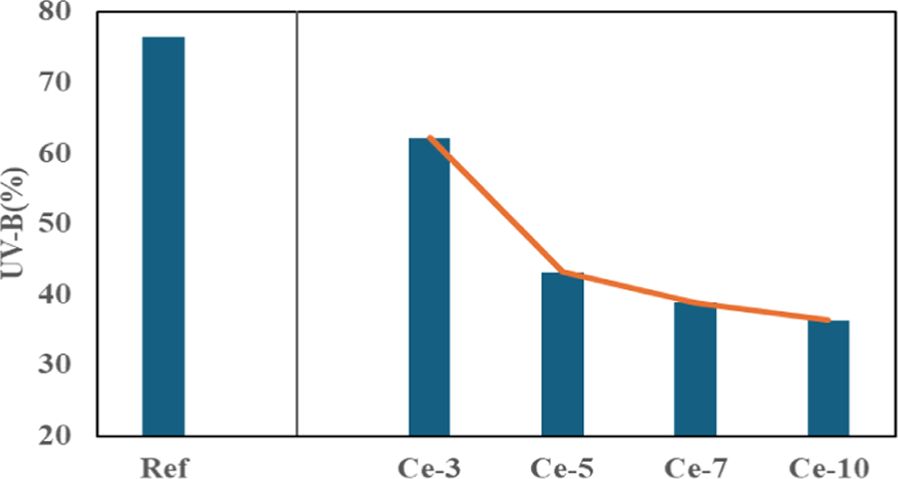
As a result of measuring the UV-B transmittance of the fabricated lenses, the control group (Ref) without nanocellulose exhibited a transmittance of approximately 76.22%. In contrast, the experimental groups containing nanocellulose showed a trend of continuously decreasing UV-B transmittance as the added concentration increased. Ce-3 with 0.03 wt% was measured at approximately 61.95%, and Ce-5 with 0.05 wt% was 42.87%, representing a substantial decrease compared with Ref. In addition, Ce-7 was 38.85%, and Ce-10, the highest concentration, was measured at 36.21%, which was the lowest transmittance among the experimental groups. Consequently, it was confirmed that UV-B transmittance continuously decreased as the amount of nanocellulose increased. Meanwhile, all samples maintained a visible light transmittance exceeding 90%, indicating that nanocellulose selectively blocks ultraviolet radiation without compromising optical clarity.The transmittance results for each sample are shown in Fig. 1.
3.2 Refractive Index and Water Content
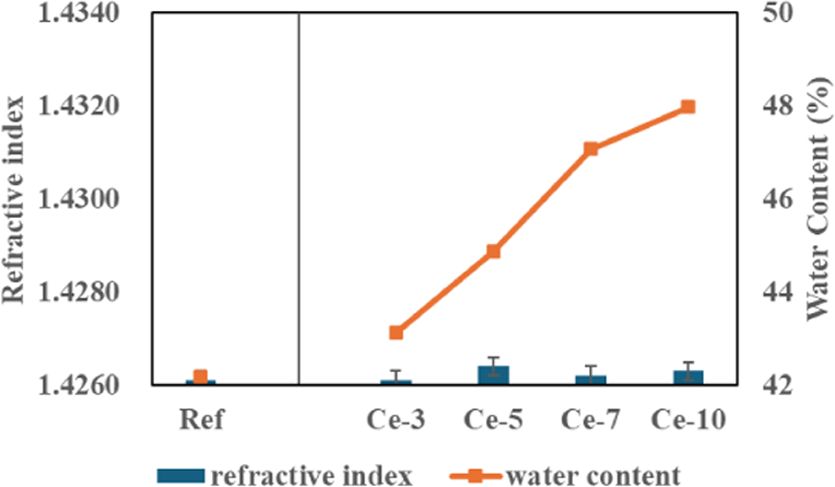
As a result of measuring the water content of the fabricated lenses, the control group Ref was approximately 42.2%. The experimental groups containing nanocellulose exhibited a trend of continuously increasing water content as the added concentration increased. Ce-3 increased to 43.1% and Ce-5 to 44.8%, while Ce-7 was 47.1% and Ce-10 exhibited the highest value of 48.0%. In contrast, the refractive index remained at a consistent level in all samples regardless of the increase in water content. The measured values were distributed within the range of 1.4260 to 1.4265, and no meaningful differences between samples were observed. The measurement results for water content and refractive index are shown in Fig. 2.
3.3 Wettability
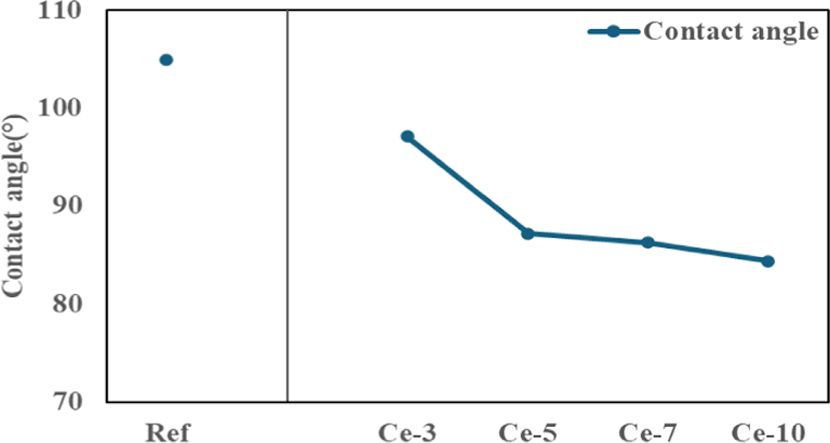
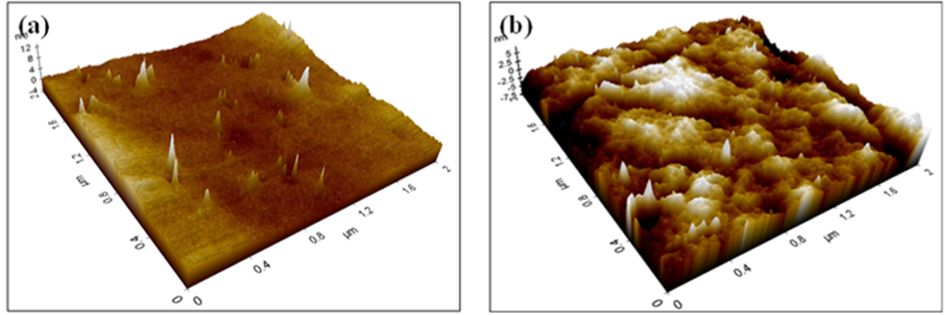
As a result of contact angle measurements, the control group Ref lens was approximately 105°. The experimental groups containing nanocellulose exhibited a trend of gradually decreasing contact angle as the added concentration increased. Ce-3 decreased to approximately 97°, and Ce-5 showed a large change to approximately 87°. Next, Ce-7 and Ce-10 were measured at 86° and 84°, respectively, confirming a trend of continuously decreasing contact angle values with increasing additive content. Surface morphology analysis using AFM showed that the control group Ref formed a relatively flat surface, with Z-axis height variation within the range of 0 to 12 nm. In contrast, Ce-10 with 0.10 wt% nanocellulose exhibited surface protrusion formation, expanding the Z-axis height variation to a range of 0 to 35 nm, and accordingly showed increased surface roughness (Fig. 4). This change in surface roughness exhibited a trend corresponding to the wettability measurement results. Ref, which had the lowest surface roughness, recorded the highest contact angle, whereas Ce-10, with increased surface roughness, exhibited the lowest contact angle. It was confirmed that the fine surface micro-roughness structure formed by nanocellulose addition was associated with changes related to improved lens wettability. The results are shown in Fig. 3.
3.4 Surface Analysis
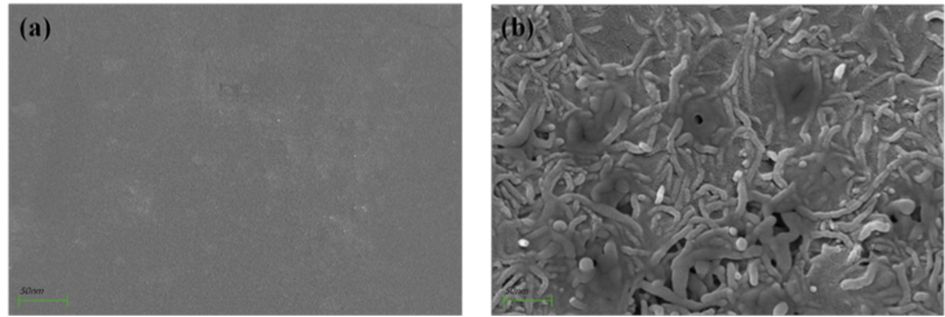
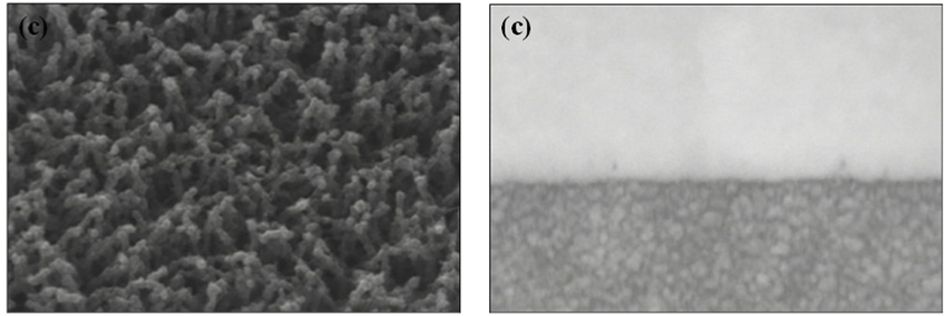
A scanning electron microscope was used to perform an in-depth analysis of the surface microstructure. SEM observations showed that Ref exhibited a smooth surface, whereas Ce-10 had fibrous structures irregularly distributed across the surface with diameters on the order of several tens of nanometers. TEM analysis results of the surface image of Ce-10 clearly identified a dense network structure formed by nanocellulose particles entangled at high density. In addition, observation of the cross-sectional image confirmed a physical interface between the lens surface region and the internal polymer structure. This indicates that the added nanocellulose forms a uniform layer near the lens surface, and this structural feature is interpreted to have acted as a factor contributing to ultraviolet blocking and improved mechanical properties. SEM, and TEM images are shown in Fig. 5, Fig. 6.
3.5 Tensile Strength
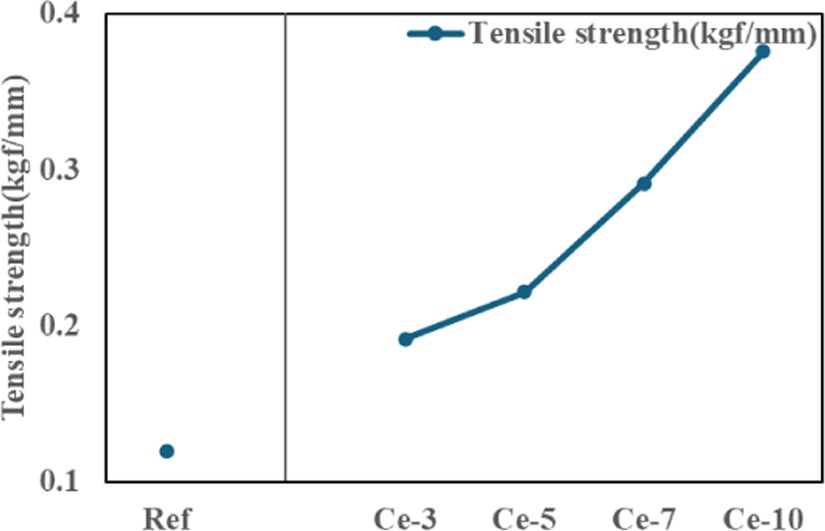
As a result of tensile strength measurements of the fabricated lenses, the tensile strength of the control group Ref was approximately 0.12 kgf/mm, showing the lowest value. In contrast, the experimental groups containing nanocellulose showed a distinct trend of increasing tensile strength as the added concentration increased. Ce-3 with 0.03 wt% was 0.19 kgf/mm, and Ce-5 with 0.05 wt% increased to 0.22 kgf/mm. In addition, Ce-7 was 0.29 kgf/mm, and Ce-10, the highest concentration, increased to 0.38 kgf/mm. Consequently, the strength of Ce-10 was improved by more than approximately threefold compared with the control group. The tensile strength results for each sample are shown in Fig. 7.
3.6 Polymerization Stability
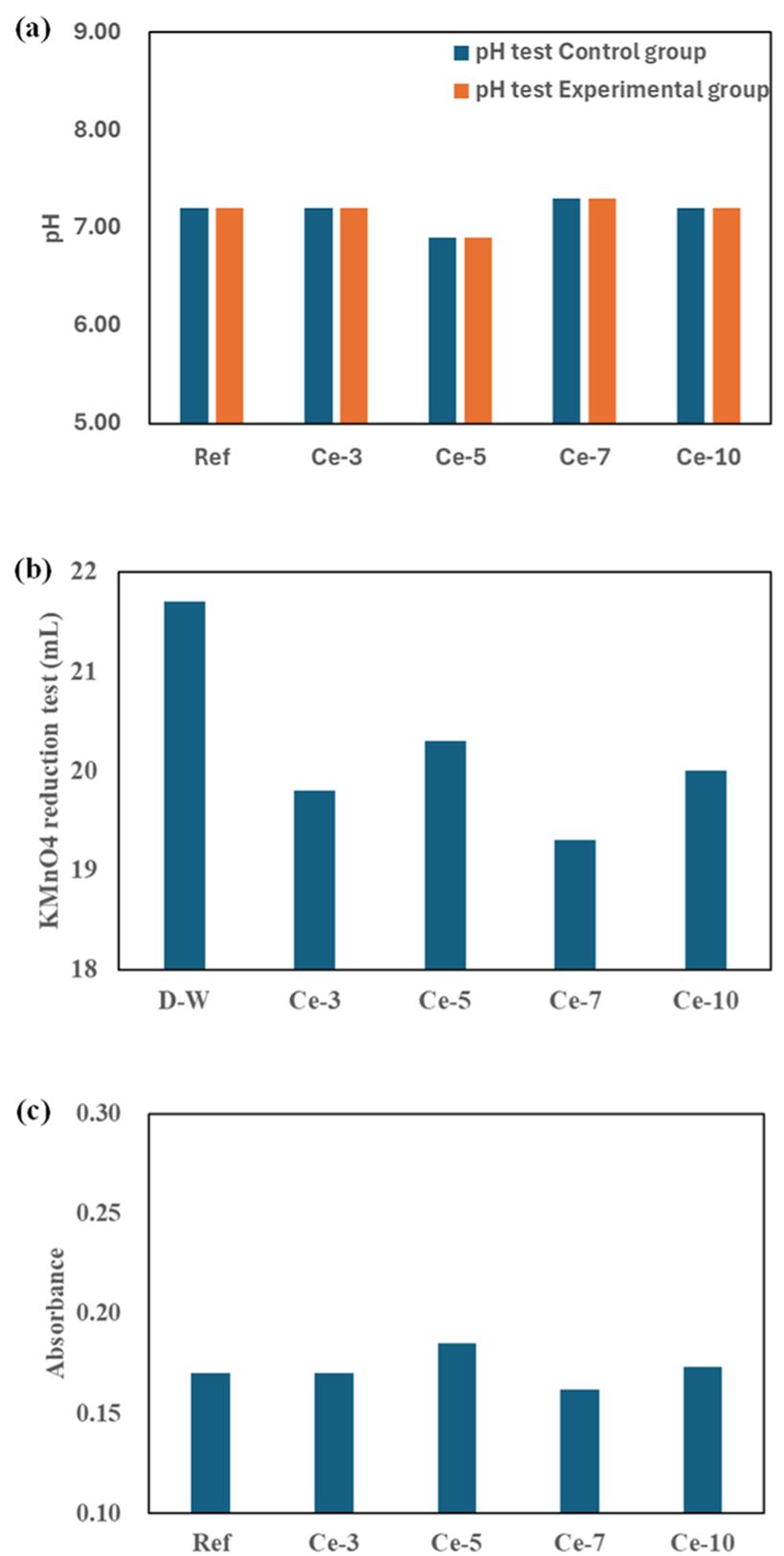
To evaluate the completeness of the polymerization reaction and elution stability of the fabricated lenses, pH, potassium permanganate (KMnO4) reduction, and UV–vis absorbance were measured. As a result of pH measurement, the control group Ref and all experimental groups containing nanocellulose exhibited values within the range of pH 6.90 to 7.30, and no distinct differences between samples were observed. In the potassium permanganate reduction test, the blank solution, tertiary distilled water (D-W), was measured at approximately 21.7 mL. For lens extracts, Ce-3 was 19.8 mL, Ce-5 20.3 mL, Ce-7 19.3 mL, and Ce-10 20.0 mL, indicating that all samples showed a similar level without large differences compared with the blank. In addition, absorbance measurements using a UV–vis spectrophotometer confirmed low absorbance values in the range of 0.16–0.18 for all samples. Therefore, no abrupt absorbance changes or specific elution trends were observed due to changes in nanocellulose addition concentration. The polymerization stability evaluation results for each sample are shown in Fig. 8.
3.7 Antibacterial Activity
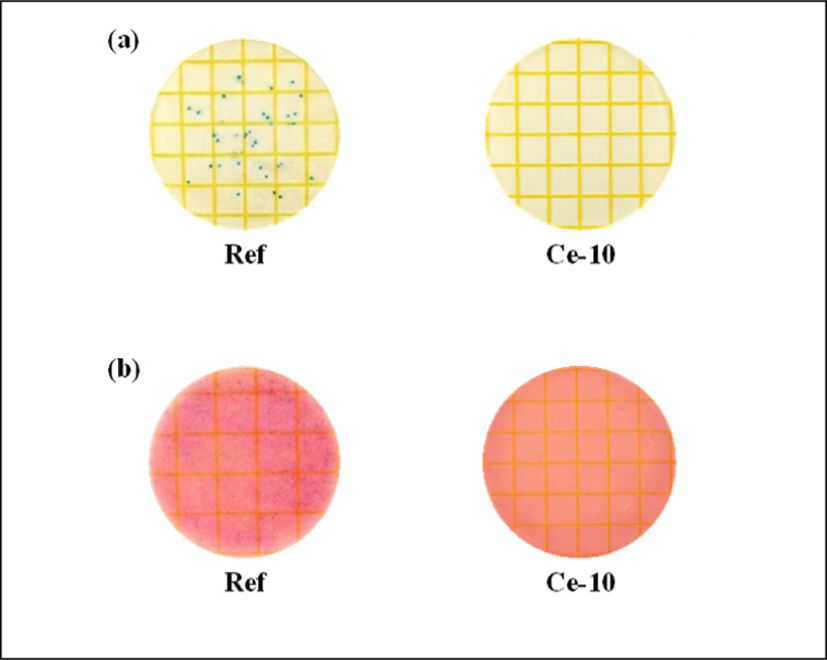
To evaluate the antibacterial activity of the fabricated lenses, culture experiments were performed using Escherichia coli and Staphylococcus aureus. As a result, the control group Ref without nanocellulose had numerous colonies that were clearly observed throughout the culture medium for both strains, indicating active bacterial growth. In contrast, the Ce-10 sample containing 0.10 wt% nanocellulose maintained a clean state in which colonies were not visually observed for both strains. This indicates that the addition of nanocellulose imparted antibacterial performance that effectively inhibited bacterial growth. Consequently, nanocellulose is considered to contribute to preventing biological contamination of the lens surface and strengthening hygiene. Images of the antibacterial experiment results are shown in Fig. 9.
|
Fig. 1 UV-B Spectral transmittance of samples |
|
Fig. 2 Comparison of refractive index and water content of samples |
|
Fig. 3 Comparison of contact angle values of the fabricated samples |
|
Fig. 4 AFM surface morphology of the fabricated samples. (a) Ref, (b) Ce-10 |
|
Fig. 5 SEM images of samples. (a): Ref, (b): Ce-10 |
|
Fig. 6 TEM images of samples |
|
Fig. 7 Comparison of tensile strength of samples |
|
Fig. 8 Elution test of samples. (a) pH test , (b) Absorbance, (c) KMnO4 reduction test |
|
Fig. 9 Antimicrobial images of the samples. (a) Staphylococcus aureus test of samples, (b) Escherichia coli test of samples |
In this study, contact lenses were fabricated by adding nanocellulose in the range of 0.03–0.10 wt% to a silicone hydrogel contact lens formulation based on DMA, NVP, HEMA, and TRIS, and the effects of varying nanocellulose content on optical properties, surface characteristics, mechanical properties, extractables stability, and antibacterial activity were comprehensively evaluated. As a result, as the nanocellulose content increased, UV-B transmittance continuously decreased from 76.22% for the control group Ref to 36.21% for Ce-10, demonstrating a distinct improvement in ultraviolet blocking performance, while water content increased from 42.2% for Ref to 48.0% for Ce-10. The refractive index remained within the range of 1.4260–1.4265, confirming that water content could be improved without significant changes in fundamental optical indices with nanocellulose addition.
In addition, wettability evaluation showed that the contact angle decreased from approximately 105° for Ref to approximately 84° for Ce-10, indicating improved surface hydrophilicity. AFM, SEM, and TEM analyses showed that the Z-axis height variation in Ce-10 expanded to 0–35 nm due to the formation of surface asperities, and fibrous structures on the order of several tens of nanometers as well as a high-density network structure were observed, suggesting that nanocellulose induced structural changes in the surface layer. These microstructural changes were considered to have contributed to UV-B blocking and improved wettability. In terms of mechanical strength, tensile strength increased from 0.12 kgf/mm² for Ref to 0.38 kgf/mm² for Ce-10, representing an improvement of more than approximately threefold compared with the control group and confirming the physical reinforcement effect of nanocellulose.
Regarding extractables stability, the pH of all samples remained within the range of 6.90–7.30, the KMnO₄ reduction values of lens extracts were similar within 19.3–20.3 mL compared with 21.7 mL for the blank tertiary distilled water, and UV–vis absorbance was also confirmed to be low within the range of 0.16–0.18, indicating that no specific elution trends were observed with increasing additive content. In addition, antibacterial testing showed that numerous colonies were observed for both strains in the control group, whereas Ce-10 had colony levels that were not visually observable for both strains, confirming that nanocellulose addition could reduce the risk of microbial contamination of the lenses.
Therefore, the nanocellulose applied in this study is considered an effective functional additive that improves the functionality of silicone hydrogel lenses in multiple aspects, and within the experimental range, the 0.10 wt% condition showed the most distinct improvements in UV-B blocking, water content and wettability, mechanical strength, and antibacterial activity.
Specifically, Ce-10 achieved a ~40%p reduction in UV-B transmittance, a threefold increase in tensile strength, and improved hydrophilicity while maintaining optical and extractables stability, confirming 0.10 wt% as the optimal loading and providing foundational data for next-generation bio-based functional silicone hydrogel contact lenses.
- 1. Musgrave, C.S.A., and Fang, F., “Contact Lens Materials: A Materials Science Perspective,” Materials, Vol. 12, No. 2, 2019, pp. 261.
-

- 2. Lin, M.C., and Yeh, T.N., “Mechanical Complications Induced by Silicone Hydrogel Contact Lenses,” Eye & Contact Lens, Vol. 39, No. 1, 2013, pp. 115–124.
-
- 3. Stone, R., “Silicone Hydrogels: Four Decades of New Chemistry in Contact Lenses,” Contact Lens Spectrum, Vol. 12, 2022, pp. 36–42.
- 4. Wuchte, L., Patel, M., Karamichos, D., and Pefkianakis, E.K., “Characterization and Analysis of Extended‐wear Silicone Hydrogel Contact Lenses Utilizing Novel Silicone Macromers,” Journal of Biomedical Materials Research Part A, Vol. 110, No. 8, 2022, pp. 1512–1523.
-
- 5. Sun, Z., Liu, Y., Chen, X., and Zhang, Q., “Methyl Methacrylate Rigid Contact Lenses Doped with N-vinylpyrrolidone and 3-[Tris(trimethylsiloxy)silyl]propyl Methacrylate for Improved Oxygen Permeability,” Polymer, Vol. 309, 2024, pp. 127439.
-
- 6. Muratore, L.M., Heuts, J.P.A., and Davis, T.P., “Synthesis of 3‐[tris(trimethylsilyloxy)silyl]propyl Methacrylate Macromers Using Catalytic Chain Transfer Polymerization: A Kinetic and Mechanistic Study,” Macromolecular Chemistry and Physics, Vol. 201, No. 9, 2000, pp. 985–994.
-
- 7. Ishihara, K., Nishida, K., Kumada, R., and Iwata, H., “Biomimetic-engineered Silicone Hydrogel Contact Lens Materials,” ACS Applied Bio Materials, Vol. 6, No. 9, 2023, pp. 3600–3616.
-
- 8. Tighe, B.J., “A Decade of Silicone Hydrogel Development: Surface Properties, Mechanical Properties, and Ocular Compatibility,” Eye & Contact Lens, Vol. 39, No. 1, 2013, pp. 4–12.
-
- 9. Tao, H., Wang, H., Gong, X., and Zhao, X., “The Influence of Molecular Weight Of Siloxane Macromere on Phase Separation Morphology, Oxygen Permeability, and Mechanical Properties in Multicomponent Silicone Hydrogels,” Colloid and Polymer Science, Vol. 295, 2017, pp. 205–213.
-
- 10. Lin, C.-H., Tung, S.-Y., Wang, D.-M., Chen, K.-S., and Lai, J.-Y., “Novel silicone Hydrogel Based on PDMS and PEGMA for Contact Lens Application,” Colloids and Surfaces B: Biointerfaces, Vol. 123, 2014, pp. 986–994.
-
- 11. Qin, G., Zhu, M., Gong, T., and Zhang, Z., “Development of Ciprofloxacin-loaded Contact Lenses Using Fluorous Chemistry,” Biomaterials, Vol. 124, 2017, pp. 55–64.
-
- 12. Kim, J.-W., and Sung, A.-Y., “Fabrication and Ophthalmic Application of Hydrogel Polymer Containing Cerium (IV)-Zirconium (IV) Oxide Nano Particles,” Journal of Korean Ophthalmic Optics Society, Vol. 27, No. 1, 2025, pp. 41–51.
-
 This Article
-
2026; 39(2): 152-158
Published on Apr 30, 2026
- 10.7234/composres.2026.39.2.152
- Received on Mar 3, 2026
- Revised on Mar 24, 2026
- Accepted on Apr 25, 2026
Services
Shared
Correspondence to
- A-Young Sung
-
* Dept. of Optometry and Vision Science, Daegu Catholic University, Daegu 38430, Korea
- E-mail: say123sg@naver.com
 Copyright ⓒ The Korean Society for Composite Materials. All rights reserved.
Gangnam Mirae Tower, Suite 601, 174 Saimdang-ro, Seocho-gu, Seoul 06627, South Korea
Tel: +82-2-598-1550 Fax: +82-2-598-1557 E-mail: composites@kscm.re.kr