







- Recent Advances in Polymeric Composite Membrane Materials for Semiconductor Wastewater Treatment
Goum Min*, Juhyuk Park*†
* Department of Materials Science and Engineering, Seoul National University, Seoul 08826, Republic of Korea
This article is an open access article distributed under the terms of the Creative Commons Attribution Non-Commercial License (http://creativecommons.org/licenses/by-nc/4.0) which permits unrestricted non-commercial use, distribution, and reproduction in any medium, provided the original work is properly cited.
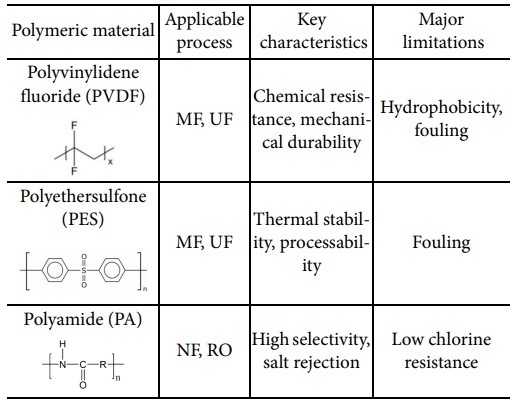
Semiconductor manufacturing generates wastewater containing particulate and dissolved contaminants from chemical mechanical polishing (CMP), back-grinding, photolithography, cleaning, and etching processes. Polymeric membranes are widely used because their pore structure, surface properties, and selective layers can be controlled according to target contaminants. Polyvinylidene fluoride (PVDF) and polyethersulfone (PES) ultrafiltration (UF) membranes mainly remove fine particles and colloids, while polyamide (PA)-based nanofiltration (NF) and reverse osmosis (RO) membranes remove dissolved ions and low-molecular-weight contaminants such as tetramethylammonium hydroxide (TMAH). However, membrane fouling, scaling, and the permeability-selectivity trade-off remain major limitations. To address these issues, hydrophilic modification and polymer composite membranes containing functional materials have been investigated. Some modified UF and thin-film nanocomposite (TFN) membranes have also been applied to actual semiconductor wastewater treatment. This review summarizes the structures and separation characteristics of polymeric membranes used in semiconductor wastewater treatment and discusses recent developments in functional modification, composite membrane design, and their potential for wastewater treatment and water reuse.
Keywords: Semiconductor wastewater, Polymeric membrane, Ultrafiltration, Reverse osmosis, Polymer composite membrane
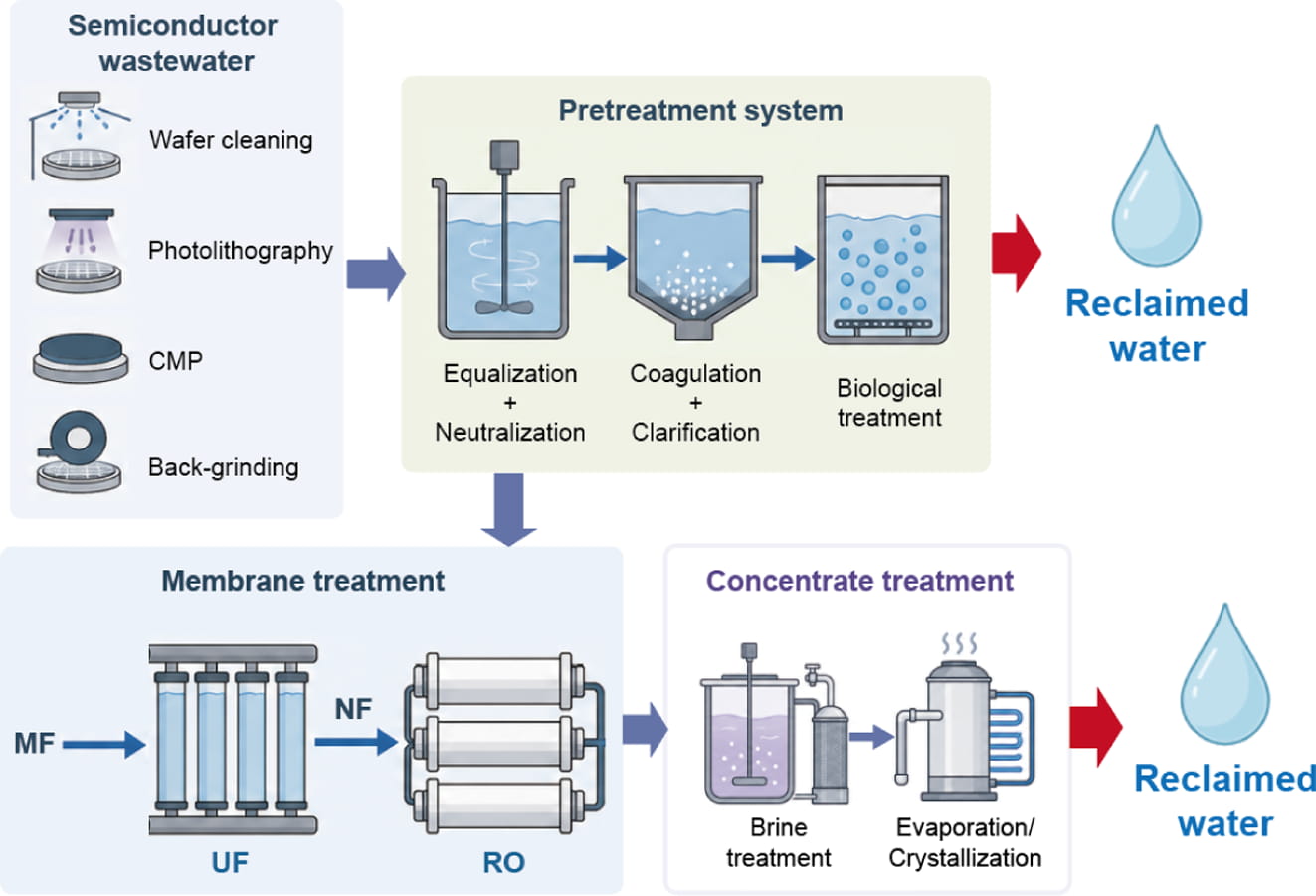
With the continued growth of the semiconductor industry, increasing amounts of ultrapure water and various chemicals are consumed during manufacturing, highlighting the growing importance of wastewater treatment and water reuse. Semiconductor manufacturing involves a wide range of processes, including cleaning, etching, photolithography, back-grinding, and chemical mechanical polishing (CMP) [1]. Because different chemicals and materials are used in each process, the resulting wastewater varies considerably in composition and characteristics. In photolithography processes, tetramethylammonium hydroxide (TMAH) is discharged as a major contaminant, whereas CMP wastewater may contain fine abrasive particles, metal ions, and organic additives [2]. In addition, wastewater generated from cleaning and etching processes may contain various inorganic ions, including fluoride ions, as well as dissolved metals [3]. Because semiconductor wastewater contains a complex mixture of particulate, organic, and dissolved contaminants, effective treatment and water reuse require separation technologies that are appropriately selected and integrated according to the size and chemical characteristics of the target contaminants [4].
Semiconductor wastewater treatment commonly employs multistage membrane processes that combine microfiltration (MF) and ultrafiltration (UF) as pretreatment steps with nanofiltration (NF) and reverse osmosis (RO) for advanced separation [5]. Such integrated processes enable the sequential removal of contaminants with markedly different characteristics, ranging from suspended particles to dissolved ions and low-molecular-weight organic compounds. Polymeric and ceramic membranes are the two major classes of membrane materials used for water treatment. Ceramic membranes exhibit high thermal and chemical stability as well as excellent mechanical durability and are primarily employed in MF and UF processes for the removal of particles and colloids [6]. In contrast, advanced separation processes such as NF and RO require the formation of thin and uniform selective layers with precisely controlled structures at the molecular level, for which polymeric materials are widely used. Polymeric materials can also be fabricated into various porous structures through phase-separation processes for MF and UF applications, while thin selective layers can be formed through techniques such as interfacial polymerization, enabling their extensive use in NF and RO membranes [7].
However, in practical industrial wastewater treatment, high intrinsic membrane separation performance alone is insufficient to ensure stable long-term operation. Fine particles originating from CMP processes can accumulate on membrane surfaces and within membrane pores, causing pore blockage and cake-layer formation, which increase filtration resistance and reduce permeate flux [8]. Dissolved silica can also become concentrated in downstream membrane processes and undergo polymerization or precipitation, or interact with metal ions to form silica-based scales, thereby deteriorating membrane performance. Meanwhile, the removal of low-molecular-weight dissolved contaminants such as TMAH by NF membranes may be insufficient depending on the structure and surface charge of the selective layer[9]. Accordingly, recent studies have moved beyond simply controlling pore size or selective-layer thickness toward the development of functional polymeric and polymer-composite membranes in which surface hydrophilicity, surface charge, pore structure, and selective-layer free volume are tailored to improve separation performance.
This review summarizes the major contaminants present in semiconductor wastewater and their separation characteristics and examines the structures and practical separation performance of polymeric UF membranes for particulate contaminant removal and NF and RO membranes for dissolved contaminant removal. Particular emphasis is placed on membrane fouling and the permeability-selectivity limitations of these systems. Furthermore, design strategies for polymer-composite membranes based on functional additives and surface modification are discussed, together with their potential applications in semiconductor wastewater treatment and future research directions.
2.1 Polymeric Membranes for the Removal of Particulate Contaminants
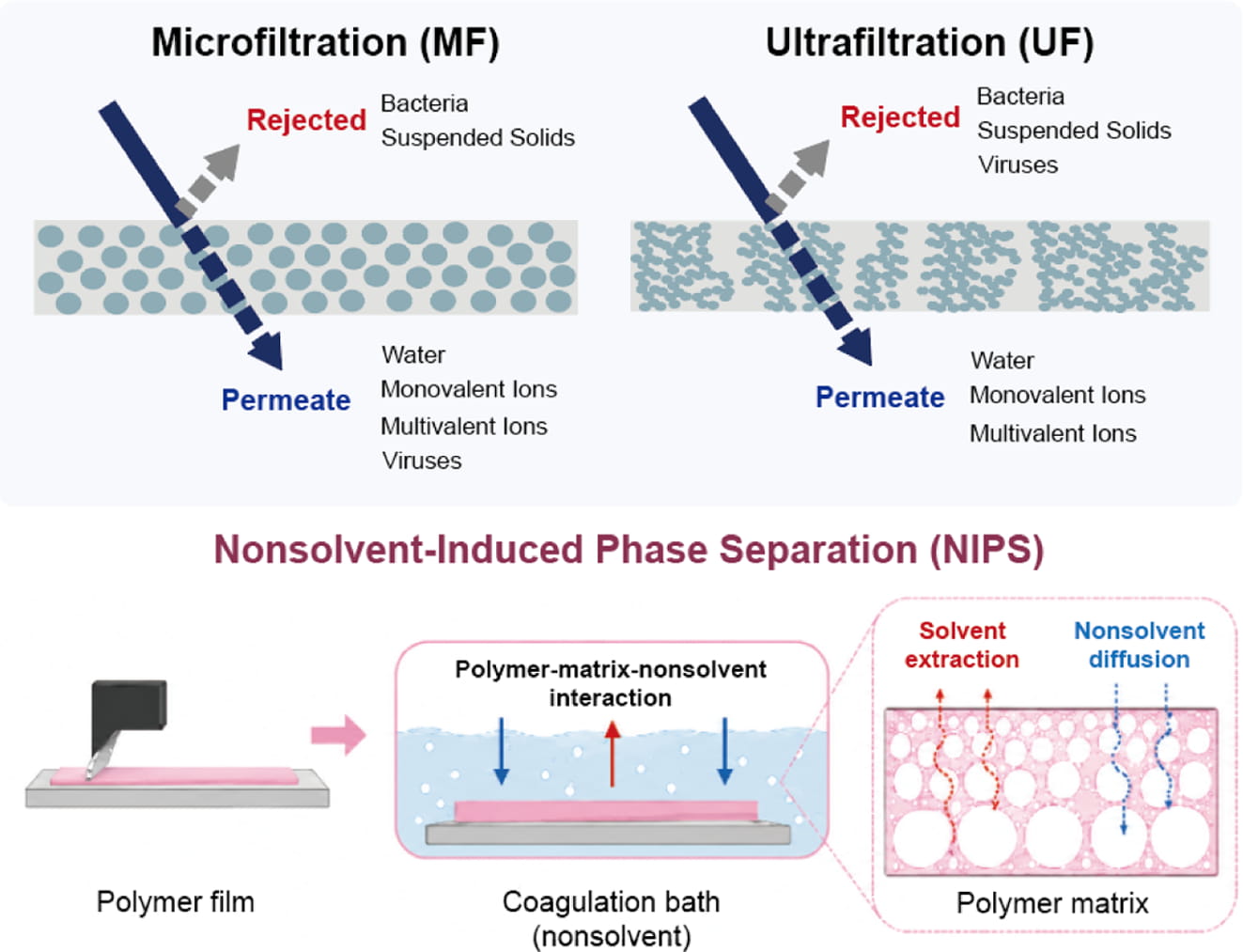
Microfiltration (MF) and ultrafiltration (UF) are commonly used for the removal of particulate contaminants. Both are pressure-driven membrane processes that utilize porous membranes and separate particles primarily through size exclusion. MF membranes generally have pore sizes of approximately 0.1-10 μm and are used to remove suspended solids and relatively large particles [10]. In contrast, UF membranes contain smaller pores, typically in the range of approximately 1-100 nm, enabling the separation of colloids and finely dispersed particles. Accordingly, MF and UF can be applied as pretreatment processes for the removal of particulate contaminants such as SiO₂, Al₂O₃, and CeO₂ generated during CMP and back-grinding processes [11]. The primary separation mechanism in both processes is size exclusion, in which particles larger than the membrane pores are restricted from passing through the membrane.
Among these processes, polymeric UF membranes can be fabricated with either symmetric or asymmetric porous structures. For water-treatment applications, asymmetric membranes consisting of a surface layer with relatively small pores supported by a highly porous substructure are widely used. The size and distribution of surface pores directly influence particle-removal performance, whereas the porosity and pore connectivity of the underlying support structure govern mass-transfer resistance and permeate flux.
Nonsolvent-induced phase separation (NIPS) is one of the most widely used methods for fabricating porous polymeric membranes. When a polymer solution comes into contact with a nonsolvent, solvent-nonsolvent exchange induces phase separation, resulting in the formation of a polymer matrix and porous structure [12]. The resulting pore size, porosity, and internal morphology depend on parameters such as polymer concentration, solution viscosity, solvent and nonsolvent composition, and phase-separation kinetics. Therefore, the separation performance and permeability of UF membranes can be controlled by adjusting the membrane-fabrication conditions.
Polyvinylidene fluoride (PVDF) and polyethersulfone (PES) are representative polymeric materials used for UF membranes because of their excellent chemical stability and mechanical properties [13]. PVDF, in particular, exhibits high chemical resistance and mechanical durability; however, its intrinsically hydrophobic nature can make it susceptible to membrane fouling caused by interactions with contaminants during water treatment. PES, on the other hand, is widely used for the fabrication of porous UF membranes because of its excellent processability and membrane-forming properties. In studies applying polymeric UF membranes to wastewater generated from CMP and back-grinding processes in wafer manufacturing, PES-based membranes effectively removed fine particles with sizes on the order of several hundred nanometers and achieved turbidity removal efficiencies exceeding 99% and nearly complete removal of suspended solids under appropriate operating conditions [14]. These results demonstrate that polymeric UF membranes can serve as effective pretreatment processes for semiconductor wastewater by removing particulate contaminants and thereby reducing the particulate load and associated fouling in downstream NF and RO processes.
Despite their high particle-removal efficiencies, polymeric UF membranes remain limited by flux decline caused by membrane fouling during long-term operation. Silica and fine abrasive particles present in CMP wastewater can accumulate on the membrane surface or block membrane pores, increasing filtration resistance and reducing permeate flux. These effects can be further intensified depending on the surface properties and pore structure of the membrane [15]. Therefore, UF membranes for semiconductor wastewater treatment should maintain high particle-removal performance while suppressing particle adhesion and membrane fouling through appropriate control of surface hydrophilicity, surface charge, and pore structure, thereby ensuring stable long-term permeation performance.
2.2 Polymeric Membranes for the Removal of Dissolved Contaminants
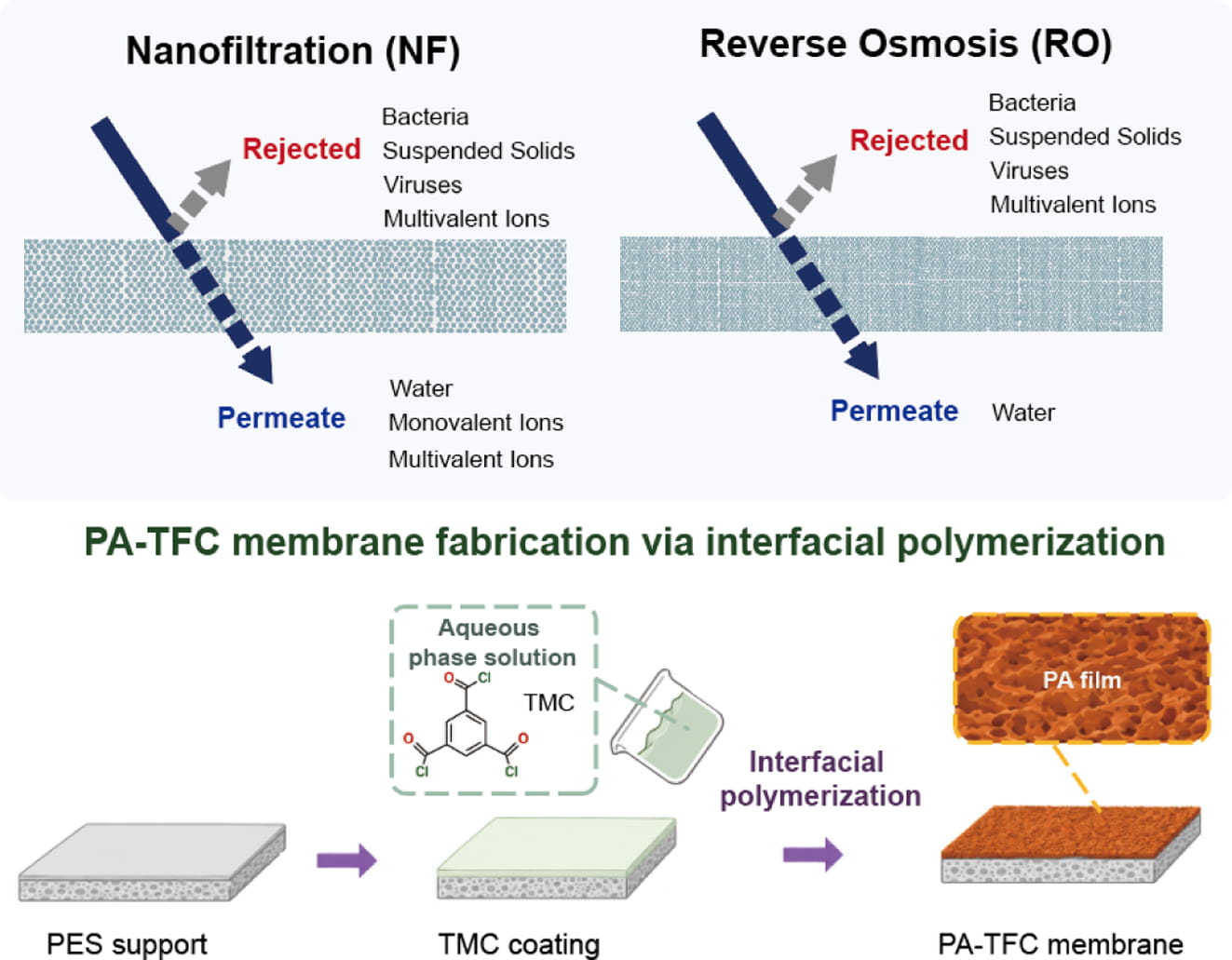
Nanofiltration (NF) and reverse osmosis (RO) are used to separate dissolved ions and low-molecular-weight organic compounds that cannot be sufficiently removed by MF and UF. NF membranes generally possess effective separation structures on the nanometer or sub-nanometer scale and have denser selective structures than UF membranes, allowing selective separation of low-molecular-weight organic compounds and ions according to their size and charge [10]. NF membranes are particularly effective for the rejection of multivalent ions, whereas RO membranes with denser selective layers are employed when a higher degree of ionic removal is required. Accordingly, NF and RO can be selectively applied for the removal of dissolved contaminants such as TMAH and various inorganic ions in semiconductor wastewater depending on the required water quality and the characteristics of the target contaminants.
Polymeric NF and RO membranes are generally fabricated as thin-film composite (TFC) membranes, in which a thin selective layer is formed on a porous support layer. The porous support mechanically supports the selective layer while minimizing permeation resistance, whereas the upper selective layer determines the selective transport of water and solutes. The selective layer is typically composed of polyamide (PA) formed by interfacial polymerization (IP) between an aqueous-phase amine monomer and a multifunctional acyl chloride monomer dissolved in an organic phase [16].
Interfacial polymerization enables the formation of thin and dense PA selective layers with thicknesses ranging from tens to hundreds of nanometers. The thickness, degree of crosslinking, free volume, and surface charge of the selective layer can be controlled through the selection of monomers and poly- merization conditions [17]. Owing to these structural characteristics, PA is the most widely used selective-layer material for NF and RO membranes. Within the PA selective layer, hydrophilic functional groups facilitate water transport, while the polymer network restricts solute transport. Consequently, solutes are selectively rejected according to factors such as molecular size, hydrated radius, and charge.
NF membranes commonly employ relatively loose PA selective layers formed by interfacial polymerization between piperazine (PIP) and trimesoyl chloride (TMC). Compared with RO membranes, these PA layers possess a less densely crosslinked polymer network, which provides relatively high water permeability. Their negatively charged surface also contributes particularly to the rejection of multivalent anions. NF is therefore suitable for applications requiring high water permeability together with selective removal of multivalent ions and certain low-molecular-weight organic compounds [18]. In contrast, RO membranes commonly employ highly crosslinked aromatic PA selective layers formed by interfacial polymerization between m-phenylenediamine (MPD) and TMC. The dense polymer network and limited free volume effectively suppress the diffusion of small dissolved ions, including TMA+, and salts, although water permeability is generally lower than that of NF membranes [19]. Thus, the differences in permeability and selectivity between NF and RO membranes are largely governed by the degree of crosslinking, free volume, and surface charge of the PA selective layer.
In a study comparing the performance of commercial NF and RO membranes for wastewater generated from semiconductor manufacturing processes, the RO membrane achieved approximately 92% removal of TMAH and 88% removal of total dissolved solids (TDS), whereas the NF membrane exhibited relatively lower removal efficiencies[20]. TMAH exists in aqueous solution predominantly as the tetramethylammonium cation (TMA+), which is relatively small and may therefore not be sufficiently rejected by the comparatively loose selective structure of NF membranes. In contrast, RO membranes with denser PA selective layers more effectively restrict the transport of dissolved ions, including TMA+. These findings indicate that appropriate selection between NF and RO membranes, based on the size and charge characteristics of the target solutes, is essential for achieving high-purity water reuse from semiconductor wastewater [21].
Despite their high solute-removal efficiencies, NF and RO membranes are also affected by membrane fouling and scale formation, which remain major limitations during long-term operation [22]. As semiconductor wastewater becomes concentrated during membrane treatment, dissolved silica, inorganic salts, and organic compounds can accumulate on the membrane surface, leading to decreased permeate flux and increased operating pressure. Such performance deterioration can be further intensified by specific interactions between contaminants and the selective layer. Furthermore, excessively densifying the selective layer to achieve high solute rejection can increase resistance to water transport. Therefore, NF and RO membranes for semiconductor wastewater treatment should be designed to maintain high dissolved-contaminant rejection while optimizing the free volume, surface hydrophilicity, and charge characteristics of the selective layer to balance permeability and selectivity and simultaneously suppress membrane fouling and scale formation [23].
To overcome the limitations of conventional polymeric membranes discussed above, particularly membrane fouling and the permeability-selectivity trade-off, various strategies have been investigated, including blending with hydrophilic polymers, surface modification, and the incorporation of functional nanomaterials. Some modified and composite membranes have already been applied to actual semi- conductor wastewater treatment processes and demonstrated improved performance, while a broader range of polymer-composite membranes incorporating functional materials has also been developed for general water-treatment applications.
3.1 Hydrophilic Modification of Polymeric Membranes for Semiconductor Wastewater Treatment
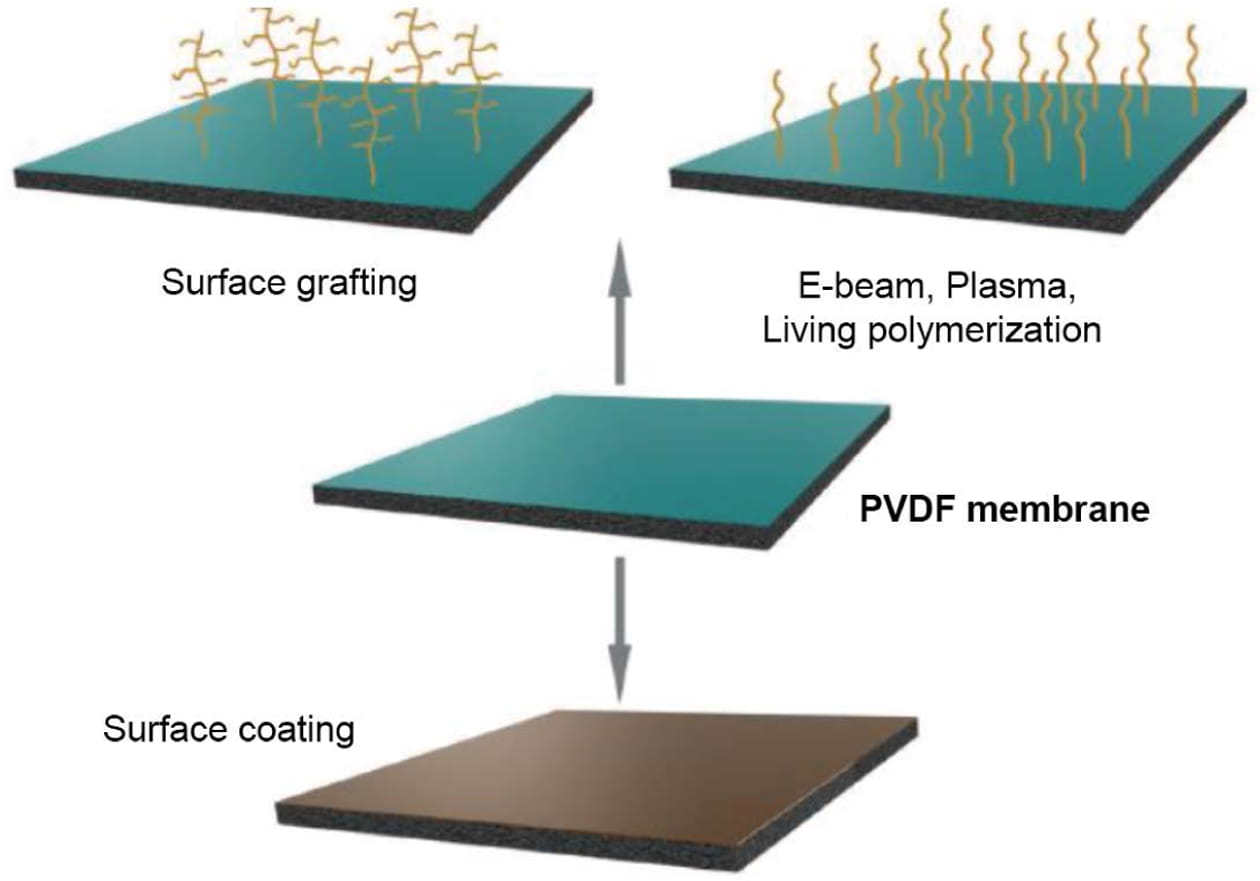
To mitigate membrane fouling in PVDF-based UF membranes, approaches such as blending with hydrophilic polymers, including polyvinylpyrrolidone (PVP), as well as surface grafting and coating have been widely investigated. Blending with hydrophilic polymers can improve membrane wettability while simultaneously affecting phase-separation behavior, thereby altering pore size, porosity, and internal morphology. In contrast, surface grafting and coating are primarily used to regulate interactions between the membrane surface and contaminants [24].
Hydrophilic modification strategies have also been investigated for the removal of organic contaminants associated with semiconductor wastewater. For example, Choi and Nam developed a hydrophilic PVDF-based membrane by introducing a polyvinyl alcohol (PVA) layer through repeated dip-coating and chemical cross-linking. The optimized membrane, prepared with five PVA coating cycles, achieved organic contaminant removal efficiencies exceeding 90% using model oil-in-water emulsions containing organic compounds such as toluene and xylene. Furthermore, the membrane maintained a flux recovery ratio above 80% over 20 filtration cycles, indicating good antifouling performance. These findings suggest that hydrophilic surface modification can improve the separation performance and fouling resistance of PVDF membranes, highlighting their potential for semiconductor wastewater treatment [26].
3.2 Thin-Film Nanocomposite Membranes for Semiconductor Wastewater Treatment
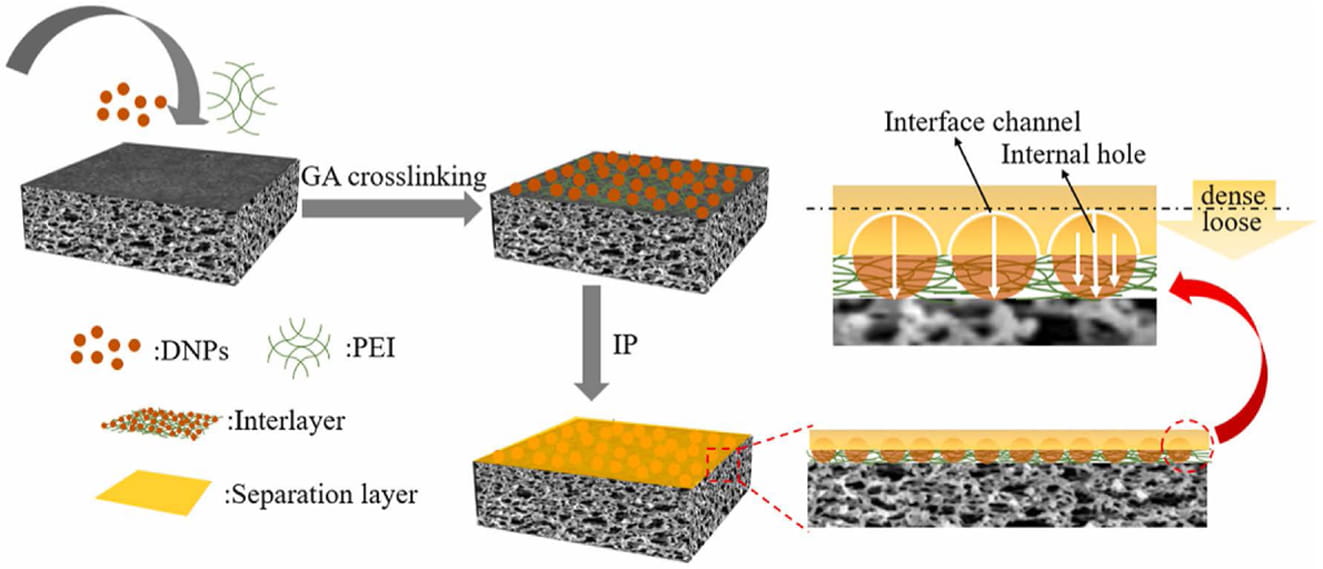
Thin-film nanocomposite (TFN) membranes incorporating functional nanomaterials have been investigated as a strategy for improving the performance of PA-based NF and RO membranes. TFN membranes are derived from conventional thin-film composite (TFC) membranes by introducing functional materials into the PA selective layer at its interfaces, or into the porous support layer, thereby modifying the structure and surface properties of the selective layer [27].
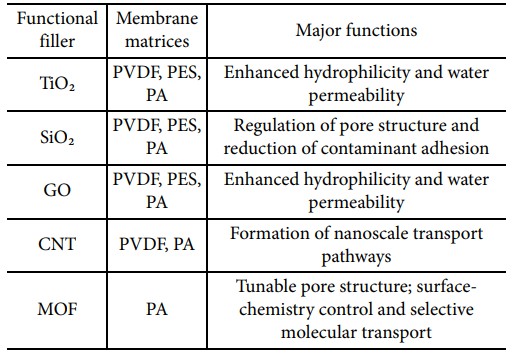
Representative functional materials include graphene oxide (GO) [28], carbon nanotubes (CNTs) [29], TiO₂ [30], SiO₂ [31], and metal-organic frameworks (MOFs) [32]. GO and surface-functionalized CNTs can enhance hydrophilicity and provide nanoscale transport pathways, whereas TiO₂ and SiO₂ can serve as functional fillers for controlling surface properties and structural stability. MOFs have also been investigated as functional materials for NF and RO membranes because their tunable pore structures can provide selective transport pathways.
The incorporation of these functional materials can alter the transport properties and surface chemistry of the PA selective layer, providing a means of enhancing water permeability and/or fouling resistance while maintaining the solute rejection performance of conventional TFC membranes. However, the formation of the PA network and interfacial structure can vary depending on the type and loading of the incorporated fillers. Therefore, achieving uniform filler dispersion and controlling polymer-filler interactions are critical for realizing the desired membrane performance.
For example, graphene oxide (GO) nanosheets were incorporated, followed by the formation of a polyamide (PA) selective layer through interfacial polymerization to fabricate TFN nanofiltration membranes. At an optimal GO loading of 0.3 wt%, the modified TFN membrane exhibited a 50.9% increase in pure water permeability compared with the pristine TFC membrane. The NaCl rejection increased by 88.5% relative to the TFC membrane, reaching 59.5%, while the Na₂SO₄ rejection reached 95.2% [27]. These findings demonstrate that incorporating hydrophilic nanofillers into composite membrane structures can improve water permeability and salt rejection, highlighting the potential of TFN membranes for advanced wastewater treatment.
Nevertheless, many composite membranes incorporating GO, CNTs, TiO₂, SiO₂, and MOFs have primarily been evaluated using general water-treatment systems or simulated feed solutions. Their applicability under the complex water-quality conditions encountered in actual semiconductor wastewater therefore remains insufficiently investigated.
Functional polymer-composite membranes have been extensively investigated for improving permeability, selectivity, and fouling resistance in various water-treatment applications. However, studies validating their long-term performance using actual semiconductor wastewater remain relatively limited [34]. Semiconductor wastewater contains a complex mixture of contaminants, including silica, abrasive particles, TMAH, inorganic ions, and organic compounds. Therefore, membrane performance demonstrated using simplified model solutions may not directly represent practical performance under actual wastewater conditions.
In UF processes, suppressing membrane fouling caused by the deposition of silica and fine abrasive particles is particularly important. Composite membranes should therefore be designed by simultaneously controlling surface hydrophilicity, surface charge, and pore structure to reduce particle-membrane interactions and maintain stable permeate flux during long-term operation [35].
For NF and RO processes, improving water permeability while maintaining sufficient selectivity toward TMAH and inorganic ions is essential. The incorporation of functional materials can regulate the free volume and transport pathways within the selective layer; however, excessive increases in free volume or the formation of interfacial defects may enhance the permeation of small solutes such as TMA+ [36]. Therefore, rather than focusing solely on permeability enhancement, structural control should be directed toward achieving an appropriate balance among target-solute selectivity, water permeability, and fouling resistance.
For practical implementation, additional factors must also be considered, including nanofiller dispersion, polymer-filler interfacial compatibility, chemical stability under acidic, alkaline, and fluoride-containing environments, performance changes during repeated chemical cleaning, and potential filler leaching. Future studies should therefore evaluate long-term membrane performance using actual semiconductor wastewater and identify functional materials and membrane structures suited to the contaminant characteristics of individual semiconductor processes [37]. Such approaches are expected to be central to the further development of polymer-composite membranes for semiconductor wastewater treatment.
Wastewater generated from semiconductor manufacturing contains a wide variety of contaminants, including fine particles and colloids, tetramethylammonium hydroxide (TMAH), inorganic ions, and organic compounds, requiring multistage separation processes tailored to the characteristics of individual contaminants. Polymeric ultrafiltration (UF) membranes can be employed as pretreatment processes for removing particulate contaminants from chemical mechanical polishing (CMP) and back-grinding wastewater, whereas nanofiltration (NF) and reverse osmosis (RO) membranes can be applied for the removal of dissolved ions and low-molecular-weight contaminants as well as for water reuse. Nevertheless, membrane fouling, scale formation, and the permeability-selectivity trade-off during long-term operation remain major limitations of conventional polymeric membranes.
To overcome these limitations, surface and structural modification using hydrophilic polymers and the incorporation of functional nanomaterials into polymer-composite membranes have been extensively investigated. Hydrophilically modified PVDF-based UF membranes and thin-film nanocomposite (TFN) membranes have demonstrated the potential to improve long-term operational stability and fouling resistance in actual semiconductor wastewater treatment. However, many studies on functional composite membranes have still been conducted using general water-treatment systems or simulated feed solutions, and validation under actual semiconductor wastewater conditions remains limited.
Future research should therefore focus on designing functional materials and membrane structures tailored to the specific contaminants generated from individual semi- conductor processes and comprehensively evaluating separation performance, membrane fouling, chemical stability, and long-term operational durability under actual wastewater conditions. Such studies are expected to facilitate the broader application of polymer-composite membranes for reliable semiconductor wastewater treatment and sustainable water reuse.
Fig. 1 Fig. 5 Table 1 Table 2
|
Fig. 1 Semiconductor wastewater treatment and water reuse process |
|
Fig. 2 MF/UF separation mechanisms and membrane fabrication via nonsolvent-induced phase separation (NIPS) |
|
Fig. 3 NF/RO separation mechanisms and PA-TFC membrane fabrication via interfacial polymerization (IP) |
|
Fig. 4 Surface modification strategies for PVDF membranes [25] |
|
Fig. 5 TFN membrane fabrication and selective-layer structure [33] |
This work was supported by the Nano & Materials Technology Development Program through the National Research Foundation of Korea (NRF) funded by the Korean government (the Ministry of Science, ICT, MSIT) (RS-2025-02304435), and the POSCO Science Fellowship of POSCO TJ Park Foundation. J.P. appreciates the administrative and technical support from the SOFT Foundry Institute at Seoul National University.
- 1. Lai, C.L., and Lin, S.H., “Treatment of Chemical Mechanical Polishing Wastewater by Electrocoagulation: System Performances and Sludge Settling Characteristics,” Chemosphere, Vol. 54, No. 3, 2004, pp. 235-242.
-

- 2. Lee, J., Kim, D., Kim, S., Im, S., Lee, C., Park, K., Kim, M., Chon, K., Woo, Y. C., Rho, H., “Comprehensive Evaluation of a Pilot-Scale Semiconductor Wastewater Reuse Process Using Ultrafiltration and Two-Stage Reverse Osmosis for Securing Intake Water Resource in Ultrapure Water Production,” Desalination, Vol. 613, 2025, p. 119115.
-
- 3. Czuba, K., Bastrzyk, A., Rogowska, A., Janiak, K., Pacyna, K., Kossińska, N., Kita, M., Chrobot, P., Podstawczyk, D., “Towards the Circular Economy — A Pilot-Scale Membrane Technology for the Recovery of Water and Nutrients from Secondary Effluent,” Science of the Total Environment, Vol. 791, 2021, p. 148266.
-
- 4. Jarvis, P., Carra, I., Jafari, M., and Judd, S.J., “Ceramic vs Polymeric Membrane Implementation for Potable Water Treatment,” Water Research, Vol. 215, 2022, p. 118269.
-
- 5. Marino, T., Russo, F., and Figoli, A., “The Formation of Polyvinylidene Fluoride Membranes with Tailored Properties via Vapour/Non-Solvent Induced Phase Separation,” Membranes, Vol. 8, No. 3, 2018, p. 71.
-
- 6. Xiong, J., Ma, R., Tian, Y., Yang, L., He, Y., Qian, J., Wu, W., Gao, Y., Luo, J., Xu, D., Shen, J., “Improvement of Coagulation and Membrane Filtration Performance in Hybrid Coagulation-UF-RO System for Chemical Mechanical Polishing Wastewater Treatment: Effect of Coagulants,” Water, Air, & Soil Pollution, Vol. 235, No. 8, 2024, p. 505.
-
- 7. Sanchis-Perucho, P., Aguado, D., Ferrer, J., Seco, A., and Robles, Á., “Direct Membrane Filtration of Municipal Wastewater: Studying the Most Suitable Conditions for Minimizing Fouling Rate in Commercial Porous Membranes at Demonstration Scale,” Membranes, Vol. 13, No. 1, 2023, p. 99.
-
- 8. Santhamoorthy, M., et al., “A Comprehensive Review of the Functionalized Polymer Composite Membranes in Wastewater Treatment,” 2025.
- 9. Kadadou, D., Arumugham, T., Tizani, L., and Hasan, S.W., “Enhanced Antifouling and Separation Capabilities of Polydopamine@Ce-MOF Functionalized PES Ultrafiltration Membrane,” npj Clean Water, Vol. 7, No. 1, 2024, p. 7.
-
- 10. Garcia, J.U., Iwama, T., Chan, E.Y., Tree, D.R., Delaney, K.T., and Fredrickson, G.H., “Mechanisms of Asymmetric Membrane Formation in Nonsolvent-Induced Phase Separation,” ACS Macro Letters, Vol. 9, No. 11, 2020, pp. 1617-1624.
-
- 11. Acarer Arat, S., Pir, İ., Tüfekci, M., and Tüfekci, N., “Production, Characterization and Water Filtration Performance of Polyvinylidene Fluoride-Based Membranes Performance of Polyvinylidene Fluoride Membranes,” Polymer-Plastics Technology and Materials, Vol. 64, No. 10, 2025, pp. 1587-1605.
-
- 12. Teow, Y.H., Chiah, Y.H., Ho, K.C., and Mahmoudi, E., “Treatment of Semiconductor-Industry Wastewater with the Application of Ceramic Membrane and Polymeric Membrane,” Journal of Cleaner Production, Vol. 337, 2022, p. 130569.
-
- 13. Pan, J.R., Huang, C., Jiang, W., and Chen, C., “Treatment of Wastewater Containing Nano-Scale Silica Particles by Dead-End Microfiltration: Evaluation of Pretreatment Methods,” Desalination, Vol. 179, No. 1-3, 2005, pp. 31-40.
-
- 14. Ben-Zvi, A., Taqui Syed, U., Ramon, G.Z., and Nunes, S., “Alternative Materials for Interfacial Polymerization: Recent Approaches for Greener Membranes,” Green Chemistry, Vol. 26, No. 11, 2024, pp. 6237-6260.
-
- 15. Lu, X., and Elimelech, M., “Fabrication of Desalination Membranes by Interfacial Polymerization: History, Current Efforts, and Future Directions,” Chemical Society Reviews, Vol. 50, No. 11, 2021, pp. 6290-6307.
-
- 16. Li, X., Qiu, Z., Wang, T., Dai, R., Wu, Z., and Wang, Z., “Exploring the Electrostatic Interaction Mechanism of Polyaspartic Acid in Improving the Rejection of Tetramethylammonium Hydroxide by Reverse Osmosis Membranes,” Environmental Science: Water Research & Technology, Vol. 9, No. 11, 2023, pp. 3008-3018.
-
- 17. Yang, X., “Controllable Interfacial Polymerization for Nanofiltration Membrane Performance Improvement by the Polyphenol Interlayer,” ACS Omega, Vol. 4, No. 9, 2019, pp. 13824-13833.
-
- 18. Lee, J., Lee, S., Choi, Y., and Lee, S., “Treatment of Semiconductor Wastewater Containing Tetramethylammonium Hydroxide (TMAH) Using Nanofiltration, Reverse Osmosis, and Membrane Capacitive Deionization,” Membranes, Vol. 13, No. 3, 2023.
-
- 19. Chen, X., Verbeke, R., Boo, C., Dickmann, M., Egger, W., Ndamage, K., Vankelecom, I. F. J., Yip, N. Y., “Elucidating the Roles of Polyamide Layer Structural Properties in the Permeability-Selectivity Tradeoff Governing Aqueous Separations,” ACS ES&T Engineering, Vol. 2, No. 10, 2022, pp. 1857-1870.
-
- 20. Bhaskar, V.V., and Kaleekkal, N.J., “Next-Generation Thin-Film Composite Nanofiltration Membranes for Water Remediation: A Review,” Emergent Materials, 2022, 5(5), 1373-1390..
-
- 21. Zhao, D., et al., “Coupling Activation and Curing to Tune the Permselectivity of Poly(Piperazine Amide) Nanofiltration Membranes,” 2023.
- 22. An, S., Lee, J., Sim, J., Park, C., Lee, J., Rho, H., Park, K., Kim, H., Woo, Y. C., “Evaluation of the Advanced Oxidation Process Integrated with Microfiltration for Reverse Osmosis to Treat Semiconductor Wastewater,” Process Safety and Environmental Protection, Vol. 162, 2022, pp. 1057-1066.
-
- 23. Abriyanto, H., “Hydrophilic Modification of PVDF Membrane: A Review.”
- 24. Korea Institute of Civil Engineering and Building Technology, et al., Final Report on the Development of Semiconductor Wastewater Treatment and Reuse Technology for Securing Industrial Water, Ministry of Environment and Korea Environmental Industry & Technology Institute, 2024, pp. 11-13.
- 25. Tayel, A., Abdelaal, A.B., Esawi, A.M.K., and Ramadan, A.R., “Thin-Film Nanocomposite (TFN) Membranes for Water Treatment Applications: Characterization and Performance,” Membranes, Vol. 13, No. 5, 2023, p. 477.
-
- 26. Y. Choi and C. Nam, “Fabrication of PVDF Membranes with a PVA Layer for the Effective Removal of Volatile Organic Compounds in Semiconductor Wastewater,” Polymers, Vol. 17, No. 10, Art. no. 1332, 2025.
-
- 27. Lai, G.S., Lau, W.J., Goh, P.S., Ismail, A.F., Yusof, N., and Tan, Y.H., “Graphene Oxide Incorporated Thin Film Nanocomposite Nanofiltration Membrane for Enhanced Salt Removal Performance,” Desalination, Vol. 387, 2016, pp. 14–24.
-
- 28. El-Aassar, A.M.A., “Improvement of Reverse Osmosis Performance of Polyamide Thin-Film Composite Membranes Using TiO2 Nanoparticles,” Desalination and Water Treatment, Vol. 55, No. 11, 2015, pp. 2939-2950.
-
- 29. Muhamad, M.S., Salim, M.R., and Lau, W.J., “Preparation and Characterization of PES/SiO2 Composite Ultrafiltration Membrane for Advanced Water Treatment,” Korean Journal of Chemical Engineering, Vol. 32, No. 11, 2015, pp. 2319-2329.
-
- 30. Li, Q., Liao, Z., Xie, J., Ni, L., Wang, C., Qi, J., Sun, X., Wang, L., Li, J., “Enhancing Nanofiltration Performance by Incorporating Tannic Acid Modified Metal-Organic Frameworks into Thin-Film Nanocomposite Membrane,” Environmental Research, Vol. 191, 2020, p. 110215.
-
- 31. Chen, Y., Sun, H., Tang, S., Feng, H., Zhang, H., Chen, K., Li, P., Niu, Q., “Nanofiltration Membranes with Enhanced Performance by Constructing an Interlayer Integrated with Dextran Nanoparticles and Polyethyleneimine Coating,” Journal of Membrane Science, Vol. 654, 2022, p. 120537.
-
- 32. Perry, L. A., Chew, N. G. P., Grzebyk, K., Cay-Durgun, P., Lind, M. L., Sitaula, P., Soukri, M., Coronell, O., “Correlating the Role of Nanofillers with Active Layer Properties and Performance of Thin-Film Nanocomposite Membranes,” Desalination, Vol. 550, 2023, p. 116370.
-
- 33. Sim, J., Lee, J., Rho, H., Park, K., Choi, Y., Kim, D., Kim, H., Woo, Y. C., “A review of semiconductor wastewater treatment processes: Current status, challenges, and future trends,” Journal of Cleaner Production, 2023, 429, 139570.
-
- 34. Sharma, S.K., and Deka, B.J., “Engineering Novel Thin-Film Composite Membrane for Efficient Forward Osmosis Desalination: Fabrication and Performance Evaluation,” ACS ES&T Water, Vol. 4, No. 12, 2024, pp. 5913-5924.
-
- 35. Wang, H., Dai, R., Wang, L., Wang, X., and Wang, Z., “Membrane Fouling Behaviors in a Full-Scale Zero Liquid Discharge System for Cold-Rolling Wastewater Brine Treatment: A Comprehensive Analysis on Multiple Membrane Processes,” Water Research, Vol. 226, 2022, p. 119221.
-
- 36. Chen, X., Boo, C., and Yip, N.Y., “Influence of Solute Molecular Diameter on Permeability-Selectivity Tradeoff of Thin-Film Composite Polyamide Membranes in Aqueous Separations,” Water Research, Vol. 201, 2021, Art. No. 117311.
-
- 37. Li, X., Lin, L., Zhang, X., Dai, R., Wu, Z., and Wang, Z., “Performance and Fouling Characteristics in a Pilot-Scale Reverse Osmosis Membrane System for Microelectronic Wastewater Treatment,” Separation and Purification Technology, Vol. 337, 2024, Art. No. 126333.
-
 This Article
-
2026; 39(5): 553-560
Published on Oct 31, 2026
- 10.7234/composres.2026.39.5.553
- Received on Sep 5, 2026
- Revised on Oct 11, 2026
- Accepted on Oct 13, 2026
Services
- Abstract
1. introduction
2. structure and separation principles of polymeric membranes for water treatment
3. functional modification and composite strategies for polymeric membranes
4. application potential and future perspectives of composite membranes for semiconductor wastewater treatment
5. conclusions
- Acknowledgements
- References
- Full Text PDF
Shared
Correspondence to
- Juhyuk Park
-
Department of Materials Science and Engineering, Seoul National University, Seoul 08826, Republic of Korea
- E-mail: juhyukp@snu.ac.kr
 Copyright ⓒ The Korean Society for Composite Materials. All rights reserved.
Gangnam Mirae Tower, Suite 601, 174 Saimdang-ro, Seocho-gu, Seoul 06627, South Korea
Tel: +82-2-598-1550 Fax: +82-2-598-1557 E-mail: composites@kscm.re.kr